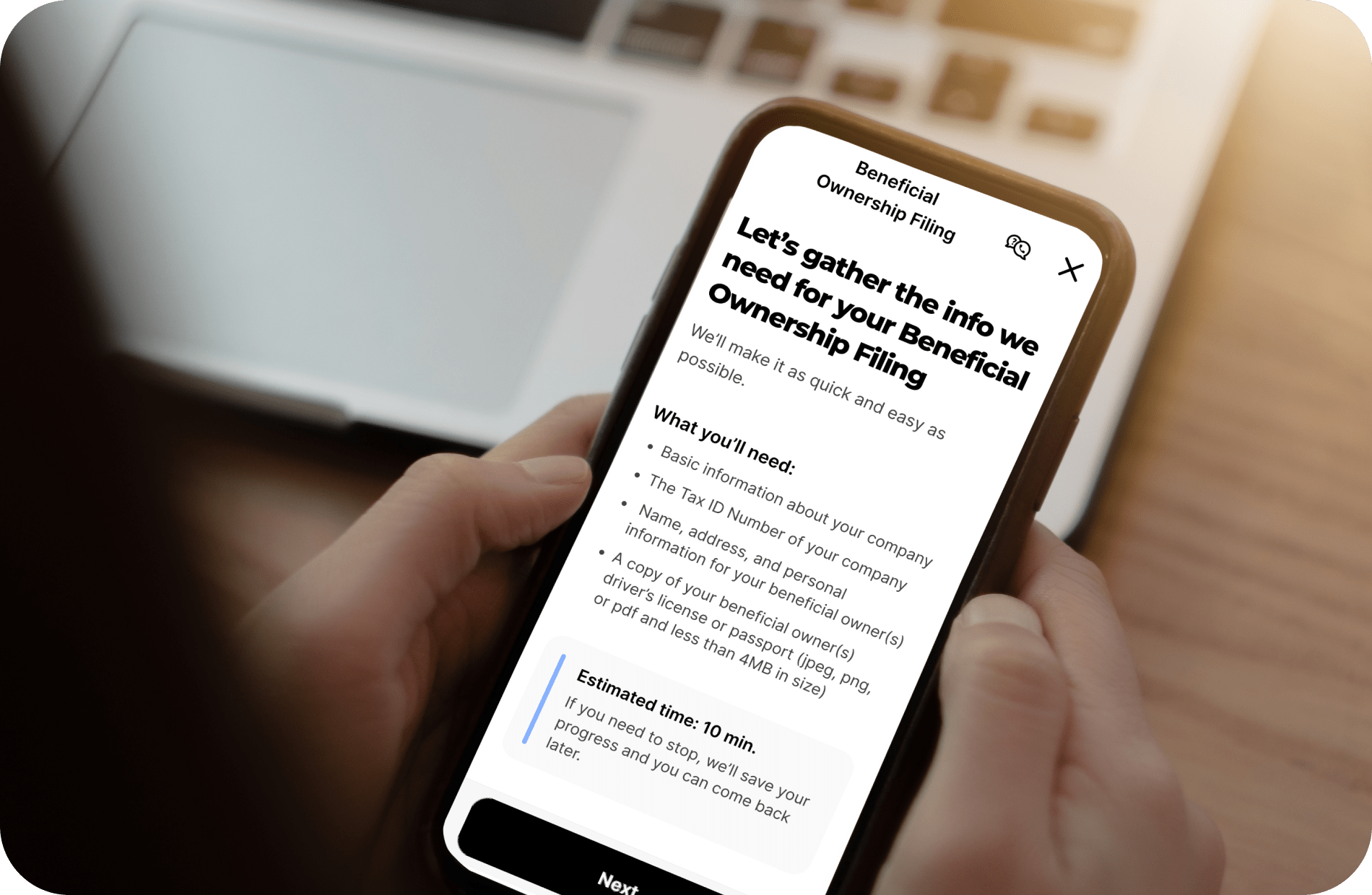
Reidsville, NC SBOs: Highlighting Changes in the CTA, BOI and FinCEN


The Corporate Transparency Act may require certain U.S. companies to disclose beneficial ownership information to FinCEN to combat financial crimes.

While a Texas federal district court’s preliminary injunction puts this requirement on hold, many experts expect that to be overturned. In that event, failure to file could lead to fines of $500 per day, up to a maximum of $10,000, and possible criminal penalties.

However, filing your Beneficial Ownership Information (BOI) report will help you avoid fines if this injunction is overruled. Waiting could mean scrambling to meet compliance requirements or penalties. ZenBusiness makes BOI reporting clear and quick, with uncomplicated instructions and speedy processes. This is ideal for SBOs that want to avoid trouble by cleaning up their obligations in advance.

1. Determine if Your Business Must File.

A ‘reporting company’ is any business, such as a corporation or LLC, that is registered by filing documents with the state, unless it qualifies for an exemption. Exemptions apply to publicly traded companies, banks, and charities. For example, a local restaurant in Reidsville, NC would likely need to file a BOI report.

2. Identify Your Beneficial Owners.

A ‘beneficial owner’ is someone who either has substantial control over a company or owns at least 25% of it. In Reidsville, an example of a beneficial owner could be a partner in an antique shop who makes strategic decisions about inventory and marketing and holds a 40% ownership stake in the business.

3. Gather the Required Information.

Prepare:

  • Business name, address, and EIN.

  • Beneficial owners’ names, addresses, DOBs, and ID details.

4. File Your BOI Report.

Deadlines:

  • Existing businesses: File by 01/01/2025.

  • New companies (2024): File within 90 days of formation.

  • New companies (2025+): File within 30 days of formation.

ZenBusiness assists SBOs in meeting BOI guidelines now and avoiding penalties. This type of service makes reporting your company’s information quick and easy.

Additional Resources:

We want to hear from you!

Don’t miss out on the chance to help us! Complete our BOI survey by December 18, 2024, and for every 25 responses, our Chamber will receive a $100 donation! Participate in the survey here! Your input is invaluable to us!

As of December 3, 2024, a Texas federal district court has issued a preliminary injunction for all states to block the CTA and its relevant regulations. However, filing your BOI will help you avoid fines if this injunction is overruled.

 
Contact Information
Rooted in Growth: A Real-World Guide to Starting a Landscaping Business

The dream of launching a landscaping business has an undeniable appeal: working outdoors, building something tangible, and helping clients transform their yards into spaces they’re proud to call home. But beneath the surface of green lawns and pruned hedges is a competitive, fast-moving industry where survival hinges on more than hard work and a reliable mower. Getting this kind of business off the ground isn’t just about tools and trucks—it’s about crafting a brand, mastering logistics, and earning trust one yard at a time. To build a landscaping operation that actually sticks, there's a lot more involved than just knowing how to edge a lawn.

Name It Like You Mean Business

The right name can shape how a landscaping brand is remembered before the first blade of grass is even cut. A strong name is both professional and personal—it should be easy to say, visually clean, and reflective of the work's quality. Good branding starts here, as a memorable name builds recognition and trust while setting the tone for everything from business cards to Instagram bios. For those looking to spark inspiration, try combining location, personal values, or natural elements while exploring landscaping business name ideas to find something that actually sticks.

Start Small, But Plan Like You’re Big

A common mistake for new landscaping owners is overextending too soon—buying too many tools, hiring prematurely, or trying to cover a massive service area. The better play is to begin with a tight focus, offering services that can be reliably delivered, then scaling once systems are in place. That includes not just service routes, but customer service workflows, billing, and project scheduling. Planning for growth from the start ensures the business doesn’t crumble when things get busy—or worse, successful.

Price It Like a Business, Not a Hobby

There’s a huge difference between weekend side hustling and running a full-scale business, and pricing often draws the line. Undercharging might attract early work, but it won’t cover insurance, wear and tear, taxes, or the hours spent doing estimates and follow-ups. It’s vital to break down the real cost of doing business and price services in a way that supports sustainability. Clients will pay more if they trust that the work is professional and dependable—so the business has to act like it from day one.

Land Clients Through Story, Not Just Sales

Word-of-mouth is gold in landscaping, but it starts with a story worth telling. Potential clients aren’t swayed by a list of equipment—they respond to visuals, narratives, and results. That means before-and-after photos, clear service descriptions, and a website or social page that’s not just functional but personal. Showcasing the journey of a job—from consultation to cleanup—builds a story clients can picture themselves in. And when that story matches their needs, they don’t need to be sold—they ask for a quote.

Think Seasonally, Operate Year-Round

Landscaping is seasonal in most parts of the country, but a smart operator finds ways to stay in motion all year. That might mean offering snow removal, gutter cleaning, holiday lighting, or even consultations during winter months. More than just filling the calendar, this keeps the brand in clients’ minds and cash flowing during leaner times. It also positions the business as a year-round presence, which deepens client relationships and adds layers to the service menu.

Hire for Fit, Train for Skill

When it’s time to grow, hiring can be a make-or-break move. A fancy resume means less than a team member who shows up, communicates well, and shares the business's vision for how clients should be treated. Technical skills can be taught, but attitude and dependability come baked in. The best hires are those who see themselves growing with the business—and who treat each lawn like it’s their own front yard, not just another square of turf to get through.

Starting a landscaping business is not unlike building a garden: it takes time, care, planning, and some digging through the dirt. It’s easy to get caught up in the rush for fast profits or flashy marketing, but the businesses that last are the ones built on trust, rhythm, and a deep understanding of the people they serve. It’s not the shiniest tools or the biggest truck that brings long-term success—it’s the details, the follow-ups, and the reputation that grows with each job. For those ready to invest in those roots, the growth will come.


Discover how the Reidsville Chamber of Commerce can help elevate your business with support and networking opportunities in our thriving community!
Contact Information
How Systems Integration Workshops Help Small Businesses Speak Globally

In the ever-thickening maze of digital commerce, small businesses are facing a deceptively complex challenge—how to manage content across languages and regions without losing their voice. As brands attempt to connect with audiences in Tokyo, Toronto, and Turin all at once, the pressure to maintain consistency has never been greater. Fragmented tools, siloed teams, and localized content chaos threaten to dilute even the most carefully crafted brand identity. This is where systems integration workshops step in, not as a tech seminar, but as a strategic lifeline.

Redefining the Workshop: Not Just for IT

The word “workshop” doesn’t exactly light a fire in the hearts of marketers or small business owners. But when reimagined through the lens of content strategy and operational clarity, these sessions become something far more valuable. Systems integration workshops bring together IT, content creators, and business leaders under one roof to deconstruct the current mess and rebuild a sustainable way forward. Instead of passively receiving information, participants dissect their own workflows, uncover translation gaps, and learn how their tools can start speaking to each other again.

Beyond Translation: Building Consistency at the Core

Content management across languages isn't just about swapping out words. Brand tone, cultural nuance, product positioning—all of it has to remain consistent while being tailored to new audiences. Workshops focused on integration push teams to consider how translation tools, content repositories, and regional marketing calendars can sync instead of clash. The result is not just a multilingual site or campaign, but a system that keeps the message aligned from South Korea to South Carolina.

Streamlining Video: The Role of AI

As video becomes the universal language of digital communication, the importance of video translation with AI has surged to the forefront of content strategy. These advanced tools, capable of multilingual dubbing while preserving both voice identity and lip-sync accuracy, offer a new frontier in unifying global messaging. When woven into broader systems integration workshops, they become more than flashy tech—they enable workflows where marketing teams can scale visual storytelling without breaking consistency or cultural nuance. That means maintaining a distinct brand voice across continents while giving regional audiences content that feels made just for them.

From Chaos to Cohesion: Taming the Toolset

Most small businesses start out scrappy, piecing together content tools like a puzzle they don’t yet know how to solve. Maybe it’s a Dropbox folder for images, a Google Doc for product blurbs, and a CMS that’s a decade old. Integration workshops confront this reality head-on, offering a guided teardown of existing systems with a view toward reassembly. The goal isn’t to buy new software—it’s to help existing tools play well together, and to ensure the process is scalable as global efforts expand.

Human-First Automation: When Tech Meets Empathy

Automation is typically pitched as a way to do more with less. But in the context of multilingual content, it's just as much about clarity and empathy. Integration sessions encourage businesses to look beyond pushing buttons and start thinking about workflows that respect the people using them. That means reducing duplicated efforts for translators, eliminating versioning chaos for content teams, and making approvals less of a guessing game. When tech is designed around real behaviors and roles, automation becomes more than a buzzword—it becomes relief.

Collaboration Without Borders: Aligning Culture and Process

It’s one thing to translate content; it’s another to align cultures. Systems integration workshops give small businesses the framework to design processes that encourage regional insight without compromising the global voice. This might mean establishing clear roles for local teams in content adaptation, or using shared dashboards to track global performance metrics. It fosters a sense of inclusion across borders, turning far-flung contributors into co-authors rather than outposts.

Integration isn’t a one-off achievement; it’s a posture, a mindset. The best workshops don’t just give attendees a list of tools to adopt—they instill a culture of intentional system design. Small businesses that participate in these sessions often come away not only with cleaner processes, but with a deeper understanding of how to evolve as they grow. It’s not about being perfect from the start, but about committing to a structure that’s both flexible and durable. In a world where audiences are global and attention is scattered, that kind of clarity is more than an advantage—it’s a necessity.


Discover how the Reidsville Chamber of Commerce can help elevate your business with unparalleled support and connections in our thriving community!
Contact Information
How to Know When It’s the Correct Time to Sell Your Business

Selling your business is one of the most pivotal decisions a small business owner can make — a transitional moment that can reshape your financial, personal, and professional future. Whether you're riding high on success or facing persistent challenges, knowing when to exit requires more than gut instinct.

This guide is designed to help you assess whether now is the right time to sell, clarify what to look for, and prepare your next steps. It includes a checklist, comparison table, and actionable guidance for protecting your interests and structuring a smooth transition.


1. Signs It May Be Time to Sell

Recognizing when to sell your business means understanding both internal indicators and external market signals. Here are common scenarios that suggest it's worth considering a sale:

  • �� You've hit a growth ceiling — Scaling further would require capital, skills, or energy you no longer want to commit.
     

  • �� A strategic buyer has approached you — Especially if they offer premium value based on synergy.
     

  • �� You’re losing motivation — Burnout, lifestyle changes, or shifting interests may reduce your ability to lead effectively.
     

  • �� Valuation is at a peak — Industry demand is high, and your financials are strong.
     

  • �� Declining performance with no clear turnaround — Persistent stagnation or downward trends despite efforts.
     

  • �� A life transition is underway — Retirement, relocation, or other personal changes may limit your future involvement.


2. Strategic Preparation Matters

Before even engaging buyers, it's essential to position your business for a clean and compelling sale. That means streamlining operations, documenting key processes, and ensuring legal and financial clarity.

Tools like Gusto (payroll and HR) and Bench (bookkeeping for small business) can help you get your house in order — and show potential buyers that your business runs smoothly without your daily presence.


3. Securing the Agreement: Structuring the Sale Contract

Once you’ve found a buyer, formalizing the sale isn't just a handshake — it’s a legally binding process that depends on a detailed contract.

Your agreement should outline:

  • The final sale price
     

  • What assets are included (equipment, IP, client lists, etc.)
     

  • Payment timelines and contingencies
     

  • Transition support or earn-outs
     

  • Liabilities, warranties, and dispute resolution

To ensure all elements are enforceable, it's wise to work with an attorney and follow a detailed guide on how to write a contract. A poorly constructed contract can cost you more than it saves.


Checklist: Preparing to Exit

Here’s a quick-action list to prepare your business for a sale:

  • ✅ Clean up and digitize financial records
     

  • ✅ Document key workflows and operational procedures
     

  • ✅ Settle outstanding debts and legal obligations
     

  • ✅ Secure customer contracts and vendor agreements
     

  • ✅ Clarify employee roles and HR compliance
     

  • ✅ Audit intellectual property and licensing
     

  • ✅ Identify transition risks (e.g., owner dependency)

For deeper support, tools like LivePlan help you present financial forecasts and exit strategies in investor-ready formats.


Compare Scenarios — Stay vs. Sell
 

Scenario

Stay the Course

Time to Consider Selling

You're passionate and reinvesting profits

Continue growing organically

Sell if reinvestment isn't yielding returns

Growth is stagnating

Fix operational inefficiencies

Sell if you've tried fixes with little result

Industry is consolidating

Compete or merge

Sell to a strategic acquirer while multiples are high

Personal burnout

Hire a manager

Sell if leadership can't be delegated

Succession is unclear

Groom a successor

Sell if no internal handoff is feasible


FAQ: Selling Your Business

How do I know what my business is worth?

Start with a valuation based on EBITDA, revenue multiples, or comparable sales. Consider using platforms like BizBuySell to research recent deals in your industry.

Should I tell my team I'm thinking of selling?

Not initially. Wait until there’s a serious buyer or signed LOI (Letter of Intent). Premature announcements can cause uncertainty and morale issues.

What taxes will I pay on a business sale?

This depends on structure (asset vs. stock sale), your tax bracket, and local laws. A qualified accountant can help you optimize for capital gains treatment.

How long does it take to sell?

The process usually takes 3–12 months, depending on market conditions and how well-prepared your business is.

Can I sell just part of my business?

Yes, partial exits or equity sales are common — especially if you're staying involved during a transition period.


Conclusion

Deciding to sell your business isn’t about quitting — it’s about aligning with where you are, what the business needs, and what comes next. When the time is right, preparation and clarity are your most valuable assets.

By thinking through operational readiness, financial hygiene, and legal documentation — including your contract — you can navigate the exit process with confidence and maximize your return.


Discover how the Reidsville Chamber of Commerce can help elevate your business with unparalleled support and connections in our thriving community!
Contact Information
Skip the Spend, Keep the Signal: Smarter Marketing Moves

Creating a digital marketing plan without deep pockets forces precision. When every dollar matters, clarity becomes leverage. There’s no room for guesswork—only deliberate moves. Small budgets expose waste quickly and reward consistency. The goal shifts from scale to sharpness: tighter audiences, stronger messages, smarter use of tools. What looks like constraint is often just a push toward simplicity that works. The right tactics don’t cost more—they just demand focus.

Start With the Person, Not the Platform

Forget tools for a second. If you don’t know who you're speaking to, it doesn’t matter how loud you are. On a limited budget, shotgun strategies bleed money. You have to narrow your aim. That means defining exactly who your customer is, how they think, and where they hang out. No guesses—just focused empathy turned into action. Take the time to define your ideal customer clearly. This gives your messaging a backbone. Vague appeals are expensive. Specificity is efficient.

Take Advantage of Generative AI

Here’s the part most people overlook: you don’t have to write or design everything yourself. Generative AI has cracked open the creative bottleneck. Logos, social posts, product mockups, web copy—all possible with just a prompt. These tools don’t replace your voice, they extend it. Especially when you’re trying to punch above your weight. Whether you need visuals or polished language on demand, this is a great resource to make your content feel premium—without the agency markup. The key is knowing what to ask it for.

Make Your Content Do Double—and Triple—Duty

Don’t chase trends. Stretch your voice. One blog post can become five social snippets, a short video, a podcast script, and a newsletter. That’s not fluff—it’s leverage. Think modular. Build core content blocks and slice them to fit the channel, the mood, the moment. The best part? You don’t need new ideas every time—just new angles. Smart marketers repurpose content into multiple formats not because it’s trendy, but because it buys back time and amplifies reach without multiplying costs. One story, many surfaces.

Get Loud Organically Before You Pay to Play

Most people scroll past ads. But they stop for humans. That’s your advantage. When you engage from the feed instead of the billboard, you’re allowed into conversations. And when it works, it works better than any paid campaign could afford. The trick? Don’t post and ghost. Show up. Listen. Reply. Your consistency is your compounding. Learn to leverage organic social media marketing not as filler, but as the main event. When you treat every post like an introduction, not a broadcast, your audience listens differently.

Get Scrappy—And Maybe a Little Weird

You don't need a Super Bowl budget to get attention. What you need is contrast. If everyone’s playing it safe, being memorable is a budget-friendly power move. Guerrilla tactics—chalk art, pop-ups, handwritten thank-you walls—don’t require big spending, just bold choices. The moment someone pauses and shares what they see, you've won the currency of attention. To move fast and leave a mark, experiment with guerrilla marketing. It’s not about going viral. It’s about being seen—and remembered—by the right few, not the many.

Local Listings: Free Real Estate, Ignored by Most

Your neighbor isn’t Googling global agencies. They’re looking for someone close, fast, and verified. That’s your lane. Claim it. Your Google Business Profile isn’t just a directory listing—it’s a visibility multiplier that requires zero spend. But too many small businesses leave theirs half-finished or outdated. Don’t be that ghost. Instead, optimize your Google Business Profile listing like it’s your homepage. Add photos, updates, hours. Ask for reviews. Those little signals stack. And when someone’s deciding where to go, you’re already there.

Track the Right Things With the Right Tools

Vanity metrics lie. They’ll make you feel busy and broke at the same time. Instead, focus on the emails that get opened, the links that get clicked, and the names that keep coming back. Even basic analytics give you a feedback loop most small businesses ignore. You don’t need enterprise tools—just clarity. Today’s platforms let you use affordable email tools wisely. Start small. Automate follow-ups. Monitor what moves people. Build from there. Consistency beats cleverness when every dollar counts.

Your plan doesn’t need to be perfect. It needs to move. Small budgets reveal what matters because there’s nowhere to hide. That’s an advantage. When you’re forced to pick your shots, you become a sharper shooter. Every section above is a lever you can pull—not all at once, but in rhythm. Adjust weekly. Refine monthly. Watch what sticks. Learn fast and shift with purpose. The goal isn’t to mimic big brands—it’s to be unmistakably present, consistently. That’s a plan you can afford. And more importantly, it’s one that works.
 

Discover how the Reidsville Chamber of Commerce can help elevate your business with unparalleled support and connections in our thriving community!
Contact Information
Why Small Businesses Should Care Deeply About Data Governance

Every business in Reidsville—whether a family-owned shop, a boutique agency, or a startup—relies on data more than it realizes. Data isn’t just numbers or spreadsheets; it’s customer trust, sales history, employee records, and financial insight. Managing that data wisely is what we call data governance — and it’s a key to running smoother, safer, and smarter.

TL;DR

Good data governance = setting rules for how you collect, store, protect, and use information.
Even the smallest business benefits — it reduces errors, prevents data loss, boosts customer confidence, and makes compliance less stressful.

The Case for Structure Over Chaos

Think of data governance as the quiet framework that keeps your business running efficiently.
Without it, duplicate files, lost passwords, or misfiled invoices become daily headaches.
With it, you get consistency, accuracy, and peace of mind.

Example:
A local landscaping company uses QuickBooks for payroll and invoicing. By clearly defining who updates records and how often, they avoid duplicate client profiles and keep cash flow transparent — no more “who paid what?” mysteries.

Build a Simple Governance Routine

        uncheckedMap what you have — Identify where all your important data lives (your CRM, email, spreadsheets).

        uncheckedDefine access — Set who can see or edit each data type. Tools like Dropbox make controlled sharing simple.

        uncheckedStandardize entries — Use consistent naming conventions (e.g., “LastName_FirstName”).

        uncheckedBack up regularly — Cloud tools such as Google Workspace automate safe storage.

        uncheckedReview quarterly — Audit your system every few months to catch old or unused data.

        uncheckedEducate your team — Keep everyone aligned with short refreshers on privacy and handling protocols.


Why It Matters

Problem

Without Data Governance

With Data Governance

Customer Confidence

Lost trust from mishandled data

Clear privacy practices and transparency

Productivity

Searching through messy folders

Organized, consistent records

Compliance

Risk of fines or penalties

Documented, auditable systems

Decision-Making

Guesswork and gut instinct

Reliable insights from clean data

The Signature Advantage

One overlooked piece of good governance is how you manage signatures and document approvals. Switching to digital signatures not only speeds up workflows but strengthens data authenticity.
By following the steps to make an electronic signature, small businesses can verify every signer, ensure documents are tamper-evident, and store them securely — no filing cabinets required.

FAQ: Small Business Questions About Data Governance

Q1: Do I need expensive software?
Not at all. Start with tools you already use, like Asana to track who’s responsible for data updates.

Q2: What’s the biggest risk if I ignore this?
Loss of customer trust and missed opportunities due to unreliable data.

Q3: How can I stay compliant with regulations?
Simple, structured policies and storage practices — check Tableau’s Data Management Guide for templates and examples.

Q4: Who should own the process?
Usually, the business owner or a trusted “data lead.” You don’t need a full IT team.

How-To: Create a One-Page Governance Plan

  1. List your main data types (e.g., sales, payroll, marketing).
     

  2. Pick storage systems — Cloud or local, but not both for the same file. Object First can guide your choices.
     

  3. Set rules — Who updates what, and how often?
     

  4. Keep a single version of truth — Use a master sheet or folder that’s always current.
     

  5. Protect sensitive data — Encrypt and limit access.
     

  6. Document everything — Include a short data policy; Microsoft 365 for Business has free templates.
     

Resource Spotlight

A surprising ally for small business organization? Evernote Teams. It’s ideal for keeping contracts, policies, and receipts all in one searchable, permission-based workspace — perfect for staying compliant and audit-ready.

For members of the Reidsville Chamber of Commerce, data governance isn’t corporate red tape — it’s good business sense. Clear rules protect your reputation, your customers, and your bottom line.
Start small, standardize your approach, and review often. When your data is under control, your business has the freedom to grow with confidence.

 
Contact Information
Advertising Discount for Chamber Members
10% off all advertising packages
We are offering fellow Chamber Members a 10% discount on all advertising for life as long as they advertise with Hometown RoCo Magazine. 
Contact Information
phone: (336) 589-8714
Offer Valid: December 1, 2025December 31, 2026
Reidsville Chamber of Commerce